A swollen or heavy leg can make ordinary tasks feel harder. Shoes may become tight by evening, the skin may feel stretched, and standing for long periods may become uncomfortable.
People searching for an Ayurvedic oil for leg swelling and filariasis may come across Vidangadi Taila. Before applying any oil, it is important to understand why the swelling has appeared. Leg swelling has several possible causes, and some require prompt medical treatment.
Why persistent leg swelling needs a diagnosis
Swelling develops when fluid collects in the tissues. In lymphoedema, damage or blockage in the lymphatic system makes it harder for the body to move this fluid away from the limb. Lymphatic filariasis can cause long-term lymphatic damage and may lead to lymphoedema or elephantiasis.
Filariasis is not the only possible explanation. Leg swelling may also develop because of vein problems, infection, heart or kidney disease, an injury, medicine side effects or a blood clot.
Sometimes both legs swell gradually. In other cases, one leg becomes swollen suddenly. Those patterns need different assessments, so treating every swollen leg in the same way can delay the right care.
A clinician may ask when the swelling began, whether it affects one or both legs, and whether pain, warmth, fever, breathlessness or skin changes are present. Depending on the findings, blood tests, scans or other checks may be required.
Where Vidangadi Taila may fit into care
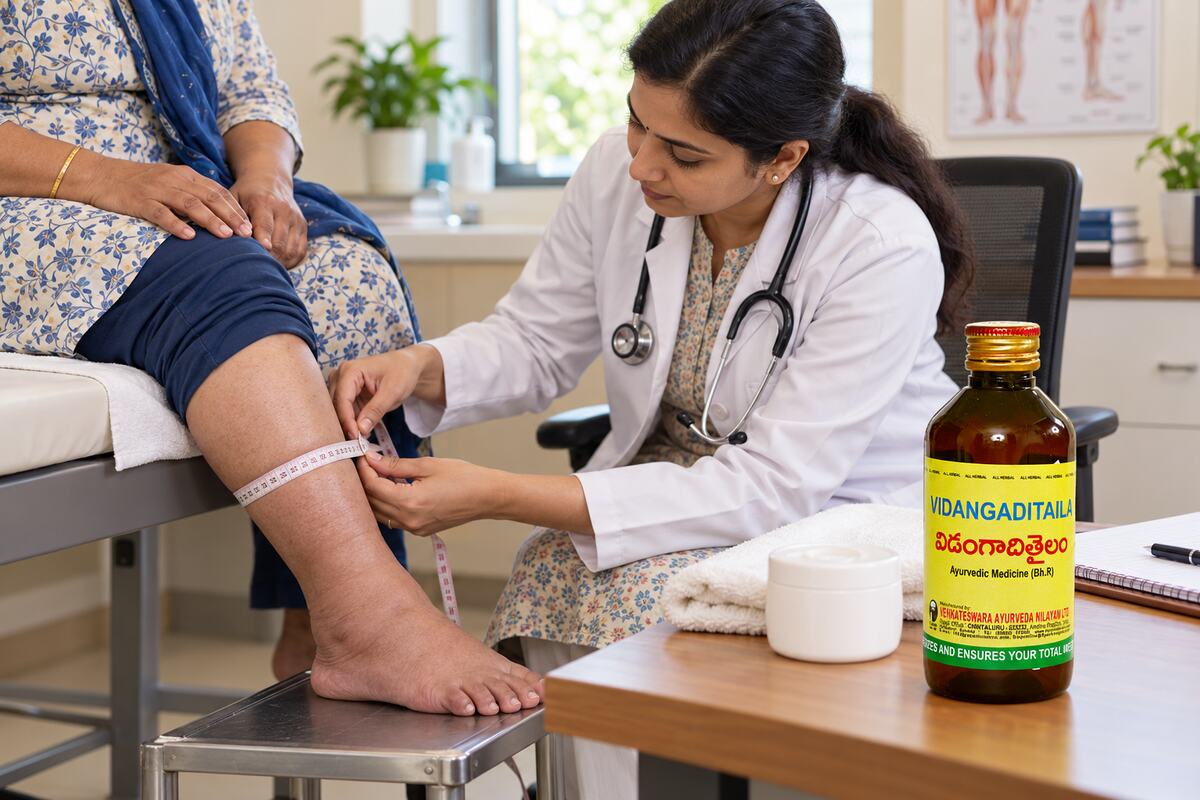
Vidangadi Taila is listed by Ayur Store as an Ayurvedic medicine for external application in elephantiasis and swelling of the affected part.
It should be considered supportive care within a diagnosed treatment plan. It does not replace medical assessment, anti-filarial treatment or other prescribed care.
Ask a qualified practitioner whether the oil suits your condition and how it should be applied. Do not assume that firm massage will push swelling away. The correct approach depends on the cause, condition of the skin and stage of the swelling.
Never apply the oil over open wounds, cracks, ulcers, weeping skin or an infected area. Avoid massage when swelling is new, hot, red, very painful or rapidly increasing. Seek medical advice first.
Supportive care for lymphoedema and filariasis
India’s National Centre for Vector Borne Diseases Control includes limb washing, wound care, foot care, suitable footwear, exercise and treatment of acute episodes in lymphoedema management.
Follow the plan given by your healthcare team, since the same routine may not suit every person.
Clean the limb gently. Wash the affected area with clean water and mild, unperfumed soap. Pay attention to folds and spaces between the toes. Dry the skin carefully without rubbing it hard.
Check the skin every day. Look for small cuts, cracks, insect bites, fungal changes or areas between the toes that remain damp. A tiny break in the skin can act like an open gate for bacteria. Report pain, warmth, spreading redness or discharge promptly.
Moisturise intact skin. A suitable plain moisturiser may help prevent dryness and cracking. Apply it only to clean, unbroken skin and keep the spaces between the toes dry. Ask your clinician how Vidangadi Taila should fit into this routine instead of layering several products without guidance.
Elevate the leg as advised. Supporting the leg while resting may help fluid movement in some cases. Avoid placing pressure behind the knee or staying in one position for many hours. Your clinician or physiotherapist can show you a safe position.
Keep moving within your limits. Prescribed ankle movements, walking or other gentle exercises can support circulation and mobility. Think of the calf muscles as a small pump that works when the ankle moves. If exercise increases pain or swelling, pause and ask for advice.
Use compression only after professional assessment. Compression garments or bandaging can help some people with lymphoedema, but they are not suitable for every circulation problem. A trained professional should choose the type, pressure and fit.
Protect the feet. Comfortable, well-fitting footwear can reduce cuts and pressure points. Avoid walking barefoot, especially outdoors or on uneven surfaces.
When leg swelling needs urgent care
Seek urgent medical help for sudden swelling in one leg, especially when it comes with pain, warmth or redness. Unilateral painful swelling can indicate deep vein thrombosis and needs medical assessment.
Chest pain, breathlessness, coughing blood, faintness or a fast heartbeat require emergency care.
Fever, spreading redness, severe tenderness, pus or rapidly worsening swelling may indicate infection. Do not massage the area or wait for an oil to work.
Get personalised Ayurvedic guidance
If you have diagnosed lymphoedema or filariasis and want to discuss external Ayurvedic support, complete Ayur Store’s free online consultation form.
Share your diagnosis, current medicines, skin condition and recent reports so the practitioner can advise you safely.
You can also explore Ayur Store for authentic VAN products. Choose Vidangadi Taila as part of a physician-guided care plan while continuing prescribed treatment, skin care, movement and follow-up.
Check out more articles at Ayurveda Blog.