When you shop for an Ayurvedic medicine online, names such as Sataputa may raise questions. What does the term mean? How can you check the quality of the product? Is it suitable for your health?
Understanding Abhraka Bhasma Sataputa safety begins with knowing what you are buying. Check the current label, ask about the finished batch, and consult a qualified Ayurvedic doctor before deciding whether to use the preparation.
What is Abhraka Bhasma (Sataputa)
Abhraka Bhasma (Sataputa) is a classical Ayurvedic mineral preparation made from purified mica (Abhraka). The term Sataputa refers to 100 traditional heating cycles, during which the mineral undergoes processing according to Ayurvedic principles.
This preparation belongs to Rasashastra, a branch of Ayurveda that deals with mineral and metal-based medicines.
Traditionally, Ayurvedic practitioners have used Abhraka Bhasma Sataputa in formulations for general weakness, respiratory wellness and urinary health. However, its traditional preparation method alone does not guarantee clinical effectiveness or safety.
A qualified Ayurvedic physician should assess its suitability based on your health condition, medical history and existing medications.
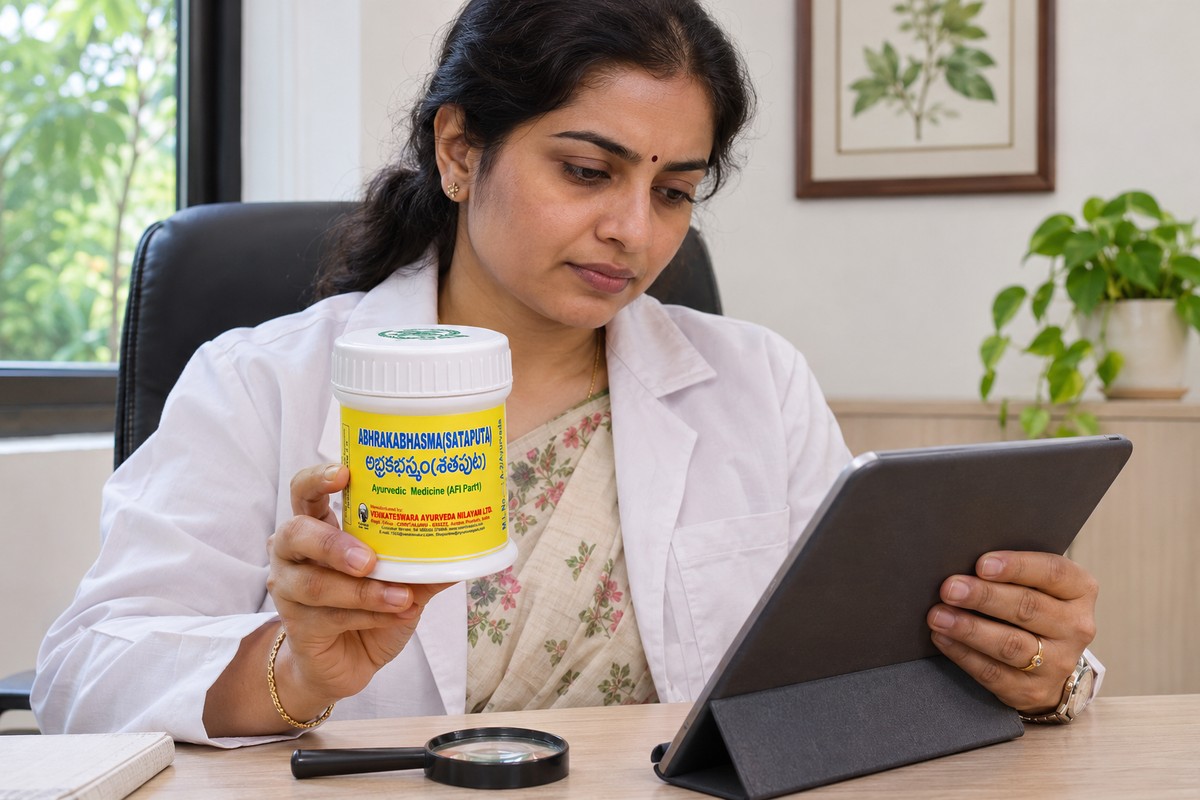
Read the current product label
Two containers may carry similar names while differing in form, quantity, or manufacturer. Match the exact product name to your physician’s recommendation before placing an order.
India’s Drugs Rules set out labelling requirements for Ayurvedic medicines, including ingredient information and expiry details.
Use the following checklist when reviewing the package:
- Exact product name, including Sataputa, and form.
- Manufacturer’s name, address, and manufacturing licence details.
- Batch number, date of manufacture, and expiry or labelled shelf life.
- Ingredient information, including any separate leaflet.
- Storage instructions, accompanying cautions, and intact packaging.
For example, a photograph of the front of a jar can help you recognise it, but the batch information may appear on the back or another part of the packaging. Ask for a current image of the complete label if the online photograph does not show it. If different parts of the listing describe different pack sizes or dosage forms, confirm the details directly with the seller.
Request quality information for the finished batch
Ask the manufacturer whether it can provide a batch-specific quality report or certificate of analysis. Such a document can describe the tests conducted, the applicable specifications, and the results. Check whether the batch number on the report matches the package.
Ask what checks cover the identity of the preparation and unwanted contaminants, including relevant toxic metals. A report for raw mica or a different batch does not answer the same question as testing the finished product.
Why appearance cannot establish safety
The product’s colour, fineness, or absence of visible shine may seem useful when comparing two preparations. However, these features cannot establish their chemical contents or rule out contaminants. A home test or a photograph cannot replace appropriate laboratory testing.
Think of two sealed containers of drinking water that look equally clear. You cannot tell from their appearance alone whether they contain unwanted substances. Ask for relevant quality documentation and have a qualified professional interpret it.
Review your health before starting
The Ministry of Ayush advises avoiding self-diagnosis and self-medication with Ayurvedic medicines. Tell your registered Ayurvedic physician why you are considering this mineral preparation. Bring details of all prescribed medicines, supplements and other Ayurvedic products, as well as relevant kidney or liver conditions. Mention pregnancy, plans to conceive, or breastfeeding before discussing use; avoid starting it during pregnancy or breastfeeding without review by your treating clinician.
Ask how your doctor would assess suitability and when to review your progress. Keep your existing prescribed treatment in place unless its prescriber advises otherwise. If you suspect an adverse reaction, contact your clinician. India’s Ayush Suraksha programme also provides a route for reporting suspected reactions.
Seek personalised guidance from Ayur Store
Book a free Ayurvedic doctor consultation to discuss your health history and ask your Ayurvedic medicine supplier about the current Abhraka Bhasma Sataputa label and available quality documentation.
For product details to support that discussion, explore Ayur Store.
Check out more articles at Ayurveda Blog.