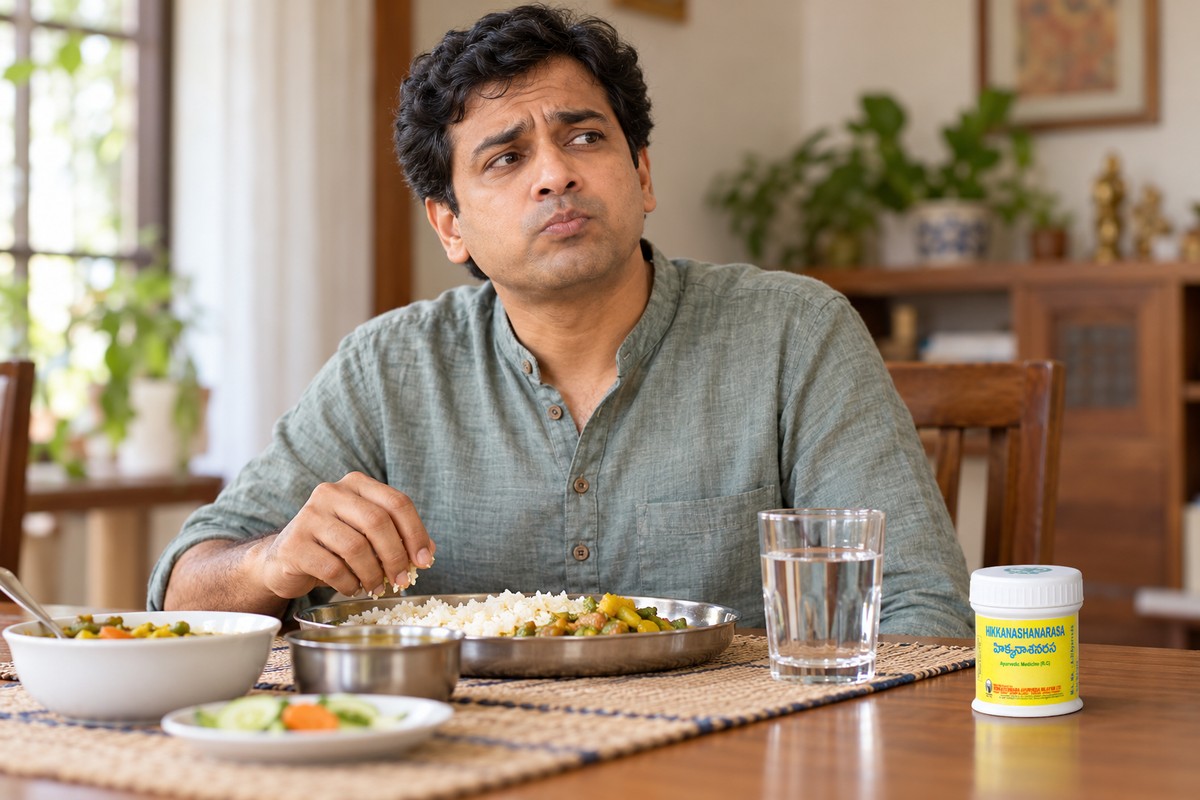
The late June monsoon brings welcome relief from the summer heat, but many people notice another seasonal change. They feel hungry later than usual, finally sit down for a meal, and then experience an uncomfortable feeling of heaviness, bloating, or gas soon after eating.
If you have ever said, “I was hungry, but now I feel too full and sluggish,” you are not alone. Humid weather can affect digestion, making meals feel heavier than they normally would.
In Ayurveda, this pattern often points to weakened digestive strength, also known as Agni. Supporting digestion with simple food choices and traditional Ayurvedic formulations may help restore digestive comfort.
Why Does Digestion Feel Slower During the Monsoon?
Think of your digestive system like the flame under a cooking pot. When the flame burns steadily, food cooks well. When the flame becomes weak, food stays half-cooked for longer.
According to Ayurveda, humid weather can reduce the strength of Agni. This slower digestion allows food to remain in the stomach longer, creating a feeling of fullness, abdominal heaviness, reduced appetite, and gas after meals.
People commonly notice:
- Feeling hungry later than usual
- Loss of appetite despite regular meal timings
- Gas after eating
- A heavy feeling in the abdomen
- Mild abdominal discomfort after meals
- Sluggishness that makes you want to lie down after eating
Unlike sudden gas caused by overeating or spicy food, this pattern develops because digestion itself has become slow.
Understanding Post-Meal Heaviness in Ayurveda
Ayurveda explains that damp weather can disturb Vata while also slowing digestion. When food is not processed efficiently, it may create abdominal fullness and discomfort.
Imagine driving through heavy traffic. Even though the destination remains the same, everything moves more slowly. In a similar way, your digestive system takes longer to process food during humid weather.
This is why simply eating less may not solve the problem. Supporting digestion becomes equally important.
Hingvastaka Churna Benefits for Slow Digestion
One traditional Ayurvedic formulation used for digestive support is Hingvastaka Churna.
The formulation is traditionally used for:
- Indigestion
- Abdominal pain associated with digestive discomfort
- Post-meal abdominal fullness
- Gas caused by sluggish digestion
Traditionally, Hingvastaka Churna is taken with warm water or buttermilk, depending on individual needs and the guidance of an Ayurvedic practitioner. These traditional serving methods complement the digestive routine, especially during humid weather.
If your main concern is occasional gas with poor appetite, you may also find this related guide helpful:
Gas, Bloating and Loss of Appetite: Ajamodarka Quick Relief Routine
While that article focuses on quicker digestive discomfort, Hingvastaka Churna fits better into a routine for slower digestion and lingering post-meal heaviness.
A Simple Monsoon Meal Plan for Better Digestion
Small daily habits often make a noticeable difference.
Morning
Start your day with warm water. A light breakfast such as vegetable upma, soft idlis, or warm porridge is generally easier to digest than refrigerated foods.
Lunch
Choose freshly cooked meals instead of leftovers.
Include:
- Warm rice or millet
- Moong dal
- Cooked seasonal vegetables
- A little roasted jeera
- Fresh buttermilk where suitable
Evening
Avoid long gaps without eating. A warm vegetable soup or roasted snacks may feel lighter than fried foods.
Dinner
Keep dinner simple and finish eating at least two to three hours before bedtime.
Avoid:
- Cold drinks
- Refrigerated leftovers
- Heavy fried foods
- Large late-night meals
These choices help reduce the sluggish feeling that often follows dinner during the rainy season.
Everyday Digestive Habits That Help
Simple routines can support digestion throughout the season.
- Eat at regular meal times.
- Eat only after your previous meal feels digested.
- Chew food slowly.
- Drink warm water in small amounts instead of iced beverages.
- Take a short walk after meals instead of lying down immediately.
These habits work alongside a balanced diet to help digestion remain active.
When Should You Seek Medical Advice?
Occasional heaviness after meals is common during the monsoon. However, persistent abdominal pain, continuous swelling, repeated vomiting, unexplained weight loss, blood in stools, or symptoms that continue despite dietary changes deserve proper medical evaluation.
Ayurvedic care works best when treatment is personalised according to your body type, digestive strength, and overall health.
Seek Personalised Ayurvedic Consultation
Digestive concerns can have different underlying causes. If you continue experiencing poor appetite, frequent gas, or post-meal heaviness, consider consulting an experienced Ayurvedic doctor for personalised guidance.
You can consult an Ayurvedic doctor here:
Click here to get your Free Online Ayurveda Consultation.
Support Your Monsoon Digestive Routine
The rainy season does not always require eating less. Sometimes your body simply needs better digestive support.
Choosing warm, freshly prepared meals, following simple daily routines, and using traditional Ayurvedic formulations such as Hingvastaka Churna under appropriate guidance may help improve digestive comfort during damp weather.
To explore trusted Ayurvedic products and seasonal wellness solutions, visit Ayur Store today.
Check out more articles at Ayurveda Blog.