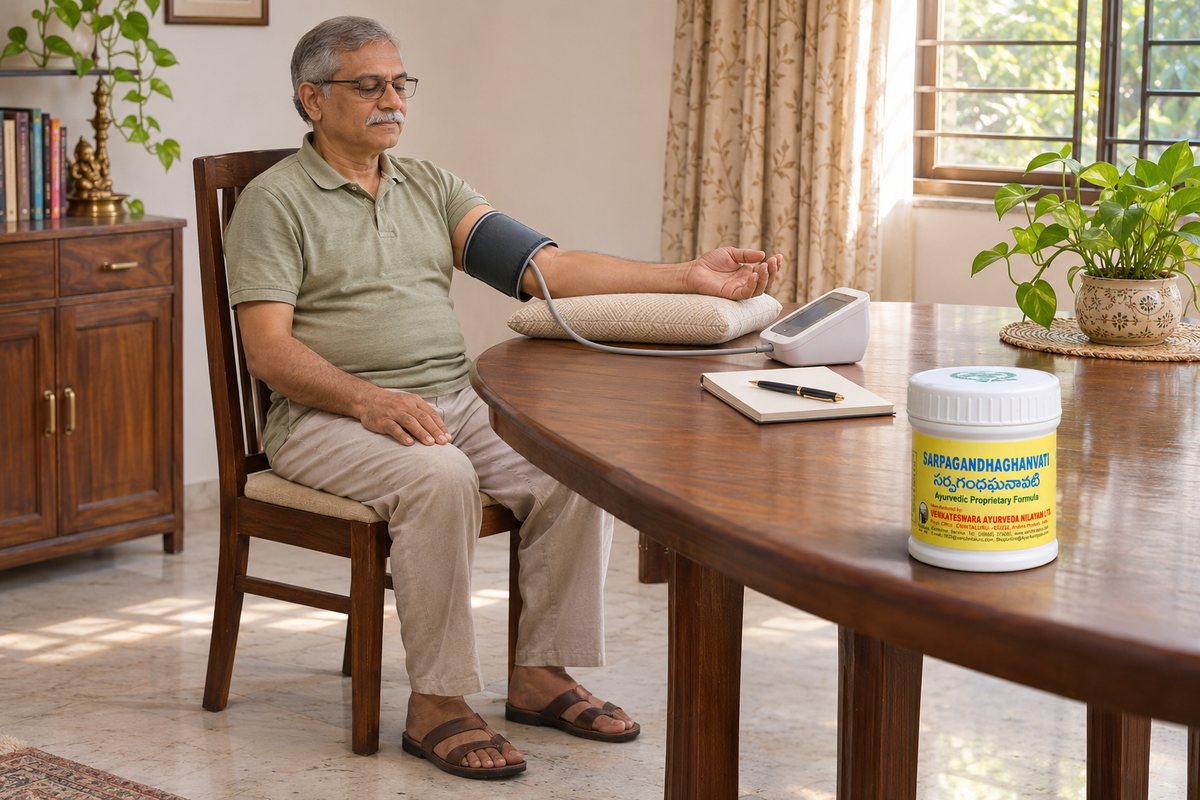
You check your blood pressure before breakfast and notice a different reading later. Should you worry, check again, or change a medicine? A record of readings and their timing gives your clinician more information than one number remembered from last week.
If you are researching Sarpagandha Ghanvati precautions, start with a review of your current treatment. Ask whether a short home monitoring diary would help. Follow the schedule your clinician recommends, and bring the diary to your appointment before considering another preparation.
Agree on a monitoring plan
Blood pressure changes with activity, stress, posture, and time of day. Feeling well does not confirm that your pressure is within your target range. India’s National Centre for Disease Control advises clinician review for persistently raised readings and checking a home device with your doctor.
Ask when to measure, how many days to record, and what results should prompt a call. Avoid repeatedly checking throughout the day without an agreed reason. The aim is a useful record that your clinician can interpret alongside an examination.
Have your monitor and technique checked
Bring your upper-arm monitor and cuff to an appointment. Ask whether the device is suitable, whether the cuff fits, and whether you are positioning it correctly.
Government hypertension guidance recommends resting quietly for about five minutes, sitting with the arm supported at heart level, and keeping the legs uncrossed. It also recommends at least two measurements, with at least one minute between them. Ask your clinician to demonstrate the technique and confirm how to apply it at home.
Keep your back supported and feet flat on the floor. Record both readings rather than choosing the one you prefer. Tell the clinician if you measured soon after coffee, exercise, or rushing around, as these circumstances can affect interpretation.
Record more than the numbers
A notebook or phone note is enough. Use a consistent format:
- Date and time of measurement.
- Both blood pressure readings, including the upper and lower numbers, in mmHg.
- Any symptoms, such as dizziness, and when they occurred.
- Your medicines and their usual timing, including supplements and Ayurvedic preparations.
- Anything unusual, such as a missed medicine or measuring immediately after activity.
For example, write that you felt lightheaded on standing after breakfast, rather than simply recording “dizzy.” Include whether you took your usual medicine before or after the measurement. This helps your clinician ask more focused questions. Keep taking prescribed medicines as directed while collecting the diary.
Understand the exact Sarpagandha Ghanvati formula
The Ayur Store Sarpagandha Ghanvati listing describes its use for blood pressure and symptoms including dizziness, anxiety, and palpitations. It lists Rajatabhasma, Guduchi Satva, Rasa Sindura, and Sarpagandha root.
Ask a qualified Ayurvedic doctor to review the current label, your medical history, and all other medicines before recommending it. Do not substitute advice about a different brand or formula.
Treat product information as a starting point for consultation. Avoid another person’s prescription to select a dose or combine treatments.
Review dizziness and plan follow up
Tell your treating clinician about new or recurring dizziness, particularly when standing. Do not assume that the product’s listed dizziness indication explains your symptom. Government guidance recognises that blood pressure can fall with a change in posture, especially in older adults.
Ask whether the proposed preparation could interact with your current medicines, what changes to watch for, and when to review your diary. Agree on a personal target and a plan for unusual readings. Do not stop, replace, or adjust prescribed blood pressure medicines yourself.
If the clinician recommends starting a preparation, note its name and start date in the same record. Bring the original entries to follow up. A few carefully recorded days can be easier to review than a list of numbers without dates or context.
Seek urgent care for chest pain, severe breathlessness, new weakness, or sudden visual problems. Do not delay care to complete a diary or await an online consultation.
Bring your diary to an Ayurvedic consultation
Request a free Ayurvedic doctor consultation through Ayur Store. Share your completed diary, current prescriptions, and relevant reports to discuss individual suitability alongside your usual blood pressure care.
For product details to support that conversation, explore Ayur Store.
Check out more articles at Ayurveda Blog.