You brush a few flakes off your shoulder before a meeting, only to notice them again by lunchtime. It is tempting to add more oil, change shampoos, or scrub harder. When flaking keeps returning, understanding your scalp can save you from a cycle of trial and error.
If you are considering Bhrungamalaka Taila for dandruff, start by checking what is causing the flakes. A suitable plan should account for irritation, washing habits, and any treatment you already use.
Similar flakes can need different care
Dandruff and a dry scalp can both shed flakes, but flaking alone does not identify the cause. Seborrhoeic dermatitis can affect the scalp with anything from mild flaking to thicker, greasy scales. Contact dermatitis can follow exposure to an irritating or allergy-triggering product, including hair dye. Medical dermatitis guidance describes these as distinct conditions.
Scalp psoriasis also needs its own assessment. Medical research psoriasis workflow stresses establishing the diagnosis before selecting treatment.
Tell the clinician whether your scalp feels tight, oily, itchy, or sore. Mention changes after colouring your hair or trying a new product. These observations help explain the problem without asking you to diagnose it yourself.
What the Bhrungamalaka Taila listing says
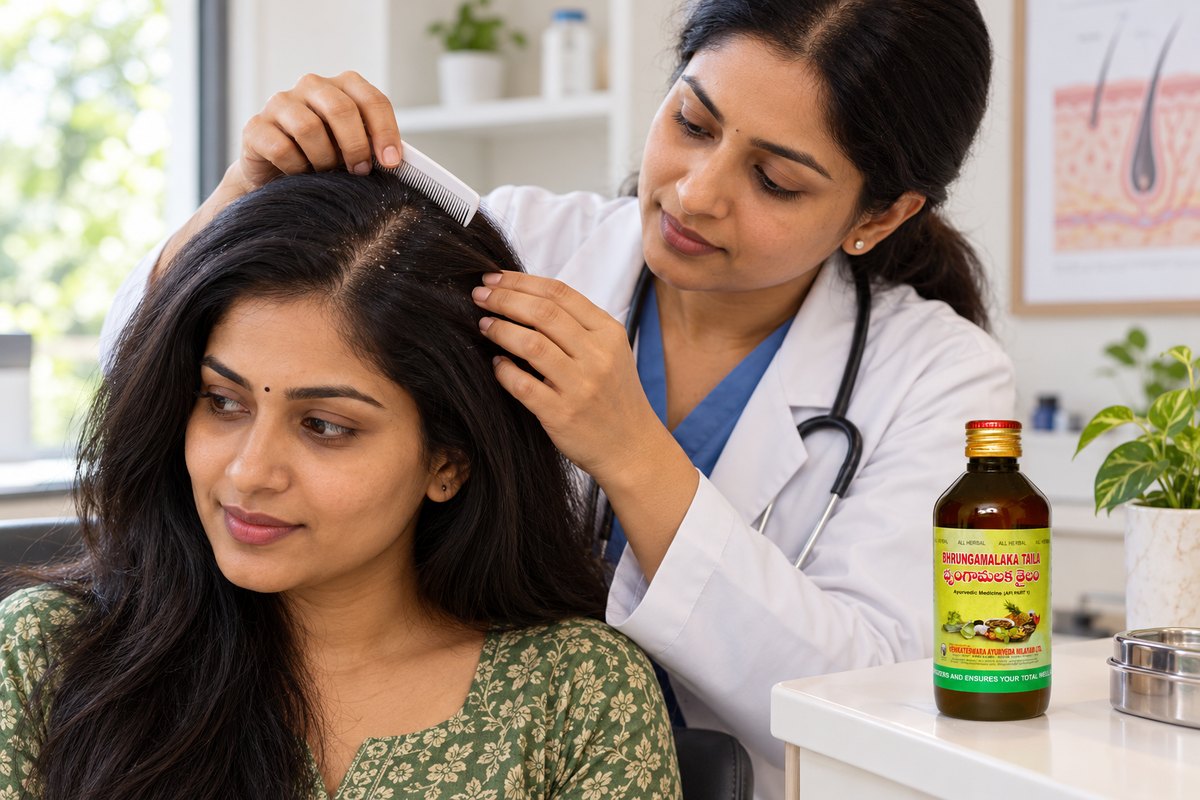
Ayur Store lists Bhrungamalaka Taila as a medicated oil and includes dandruff among its traditional uses. The product-specific description advises gentle application to the head. It lists Bhringraj, amla, coconut oil, and gingelly oil among the ingredients.
Ask a qualified Ayurvedic doctor whether the preparation suits your scalp and how it could fit alongside any dermatologist-prescribed care.
You can view Bhrungamalaka Taila on Ayur Store and share the current label with your clinician before ordering. Mention previous reactions to oils or other ingredients.
Fit oiling around an appropriate washing routine
More oil is not automatically a better treatment. Ask how much to apply, how often to use it, how long to leave it on, and when to wash it out. Do not assume that overnight application suits everyone.
For example, if a clinician recommends the oil on selected wash days, write that down alongside your shampoo instructions. A clear schedule is easier to follow than adding another product whenever flakes appear. If you use a prescribed shampoo, ask whether oiling should happen on a different day. Keep the agreed schedule visible in the bathroom so you can follow it without relying on memory.
Medicated shampoos can have a role in treating seborrhoeic dermatitis, as the Gujarat health department’s formulary explains. Follow the instructions for the particular product your clinician recommends, including its contact time and rinsing requirements.
Keep the oil for external use and away from the eyes. Avoid forceful scratching or scraping scales off with a comb. Agree on a review date so you can assess whether the routine helps.
Pay attention to product tolerance
If a newly introduced oil, shampoo, or dye causes burning, increased itching, redness, or swelling, stop using it and seek advice. Trying to push through irritation can make it harder to identify the trigger. Medical dermatitis guidance includes removing the provoking agent as part of care.
Keep a brief record of what you applied and when symptoms changed. Take photographs of the labels to your appointment. Avoid introducing several new products together, which makes the history harder to interpret.
Know when flakes need an examination
Arrange assessment for painful patches, crusting, persistent redness, or patchy hair loss. Scaling with hair loss can occur in conditions such as scalp ringworm, which needs different treatment from ordinary dandruff.
Do not keep covering a sore or worsening scalp with more oil. Explain when the change started, whether it is spreading, and what you have already tried. Prompt examination matters more than finding a stronger home routine.
For related reading, see VAN’s earlier article, Summer Headaches and Burning Eyes: A Cooling Scalp Routine with Bhrungamalaka Taila. Its focus differs from assessing recurring flaking.
Seek personalised Ayurvedic guidance
Request a free Ayurvedic doctor consultation through Ayur Store to discuss Bhrungamalaka Taila’s suitability. Share your scalp symptoms, current products, existing diagnosis, and any prescribed treatment. If your scalp is painful or losing hair in patches, arrange an in-person examination too.
When you are ready to learn more about suitable products, explore Ayur Store and discuss your options with a qualified Ayurvedic doctor.
Check out more articles at Ayurveda Blog.