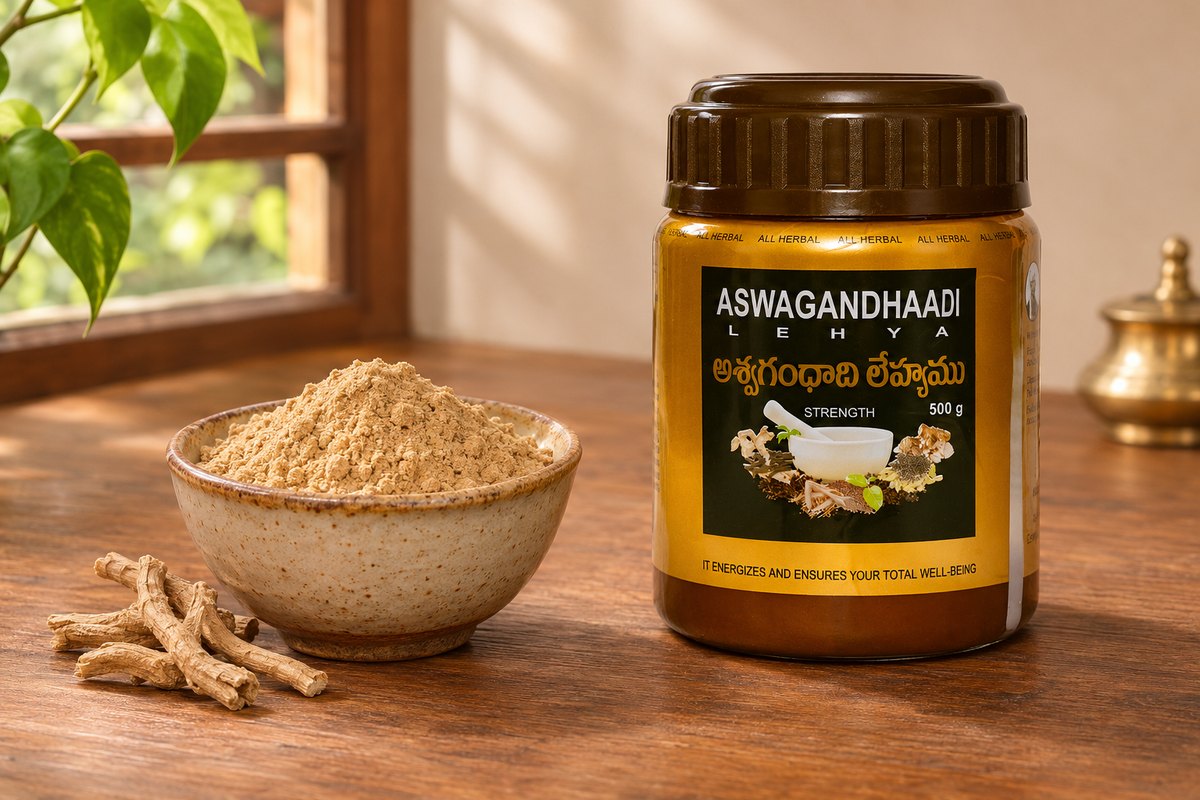
Ashwagandha appears in many Ayurvedic products, from simple powders to extracts and thick herbal preparations. If you find two products with similar names while shopping online, you might assume they are interchangeable.
Comparing Aswagandhaadi Lehya vs ashwagandha powder starts with understanding what each product contains. Both may contain the same root, but their complete ingredients and forms differ. Knowing those differences can help you have a more useful discussion with your Ayurvedic doctor.
What is Aswagandhaadi Lehya
Aswagandhaadi Lehya is a traditional Ayurvedic preparation that combines ashwagandha root with several other ingredients. The Ayur Store listing includes Pippali, Sounthi (dry ginger), Maricha (black pepper), Ela (cardamom), Jatiphal (nutmeg), sugar, honey and ghruta (ghee), among others. It describes the product as a preparation for strength and lists it in 300 g and 500 g packs.
Lehya, also called avaleha, refers to a thick, semisolid Ayurvedic preparation with a consistency similar to a paste. Official guidance describes this traditional form as one that can contain herbal ingredients, sweeteners, ghee and honey.
The ingredients and consistency help distinguish it from a plain herbal powder.
What is ashwagandha powder
Plain ashwagandha powder, often called Ashwagandha Churna, consists of ground ashwagandha root when sold as a single-ingredient preparation. The Ayurvedic Pharmacopoeia of India identifies the medicinal plant material as the dried mature roots of Withania somnifera.
The Ministry of Ayush issued a directive in April 2026 requiring manufacturers of Ayush medicines to use ashwagandha roots only, including in compound preparations. When comparing products, check the actual ingredient panel to identify the plant part and whether the product contains added ingredients.
Aswagandhaadi Lehya vs ashwagandha powder
Think of plain ground ginger and a prepared ginger-based paste. Both contain ginger, but the paste may also contain several other ingredients. You would not assume that equal amounts of the two contain the same amount of ginger.
Apply the same reasoning when comparing ashwagandha preparations.
- Plain powder: A ground root preparation when sold without other ingredients.
- Aswagandhaadi Lehya: A semisolid formula that combines the root with additional herbs, sweeteners and a base.
- Ashwagandha extract: A separate type of preparation that may specify a particular concentration of herbal compounds.
Check the exact product name, ingredient panel and instructions. Similar packaging names or shared ingredients cannot establish that the products have equivalent strengths, effects or safety profiles. Ask your physician before switching between them or combining them.
Why the complete formulation matters
A person who monitors their sugar intake needs to consider more than the ashwagandha itself. The Aswagandhaadi Lehya listing includes both sugar and honey. It specifically states that the medicine is unsuitable for patients with diabetes.
If you have diabetes, avoid this formulation and discuss suitable alternatives with your doctor. If you follow another medically advised diet or need to avoid particular ingredients, ask for the current label and relevant product details.
Ghee and the additional herbs also form part of the preparation. Review the full ingredient list if you have allergies, dietary restrictions or concerns about any ingredient.
Can research on ashwagandha apply to every product
In September 2026, the Press Information Bureau reported results of a multicentre clinical study that evaluated a specific standardised ashwagandha root extract over 24 weeks in vaccinated adults. The report found that participants generally tolerated the extract well.
This research evaluated that particular preparation in a particular group of people. It did not test VAN’s finished Aswagandhaadi Lehya. A study of one extract cannot establish identical benefits or safety for a different powder or a combination of herbs, sugar, honey and ghee.
Ask which preparation researchers studied before applying their findings to a product you are considering.
When to seek professional advice
The Ministry of Ayush’s safety review discusses pregnancy, thyroid function and reported cases of liver injury associated with ashwagandha use. If you are pregnant, breastfeeding, have a thyroid condition or have liver concerns, consult your treating doctor before using ashwagandha products.
Share all medicines and supplements you take, including thyroid medicines and other Ayurvedic preparations. Your clinician can consider potential interactions and whether the complete formula fits your health history. Avoid self-medication or changing prescribed treatments without advice.
Seek personalised Ayurvedic consultation
Unsure which formulation suits you? Book an Ayurvedic doctor consultation to discuss your health goals, current medicines and the exact Aswagandhaadi Lehya formulation.
Explore Ayur Store to learn more about its traditional Ayurvedic medicines and make informed choices with professional guidance.
Check out more articles at Ayurveda Blog.