Persistent itching can disturb sleep, work and even confidence. When a patch fades and returns, it is tempting to search for a matching photograph online or try the cream that helped someone else. Yet similar-looking rashes can have very different causes. The safest way to consider Divyasinduram for skin diseases is within a doctor-guided plan that starts with the right diagnosis.
One symptom can point to different skin conditions
An itchy patch is a symptom, not a diagnosis. A fungal infection may appear as an expanding, scaly ring, but previous use of a steroid cream can change its usual appearance. Eczema may cause dry, inflamed or thickened skin. Contact dermatitis can follow exposure to jewellery, hair dye, detergent, fragrance or workplace materials. Psoriasis often produces clearly defined, scaly plaques and may also affect the scalp, nails or joints.
Some infectious or sexually transmitted conditions can also cause skin lesions. Their appearance alone cannot confirm the cause. The location, duration, recent exposures, medicines, accompanying symptoms and examination findings all matter. A doctor may recommend a skin scraping, potassium hydroxide test, patch test, culture or another investigation when the diagnosis remains uncertain.
The Indian Council of Medical Research publishes separate workflows for dermatophytosis, eczema and dermatitis, and psoriasis. This distinction matters because each condition needs a different treatment approach. Treating every itchy patch as a fungal infection, or every red patch as eczema, can delay suitable care.
Where Divyasinduram may fit
Divyasinduram is traditionally positioned for patches, inflammation and itching associated with the Ayurvedic concept of blood impurities. Venkateswara Ayurveda Nilayam also places it within its traditional skin-care range.
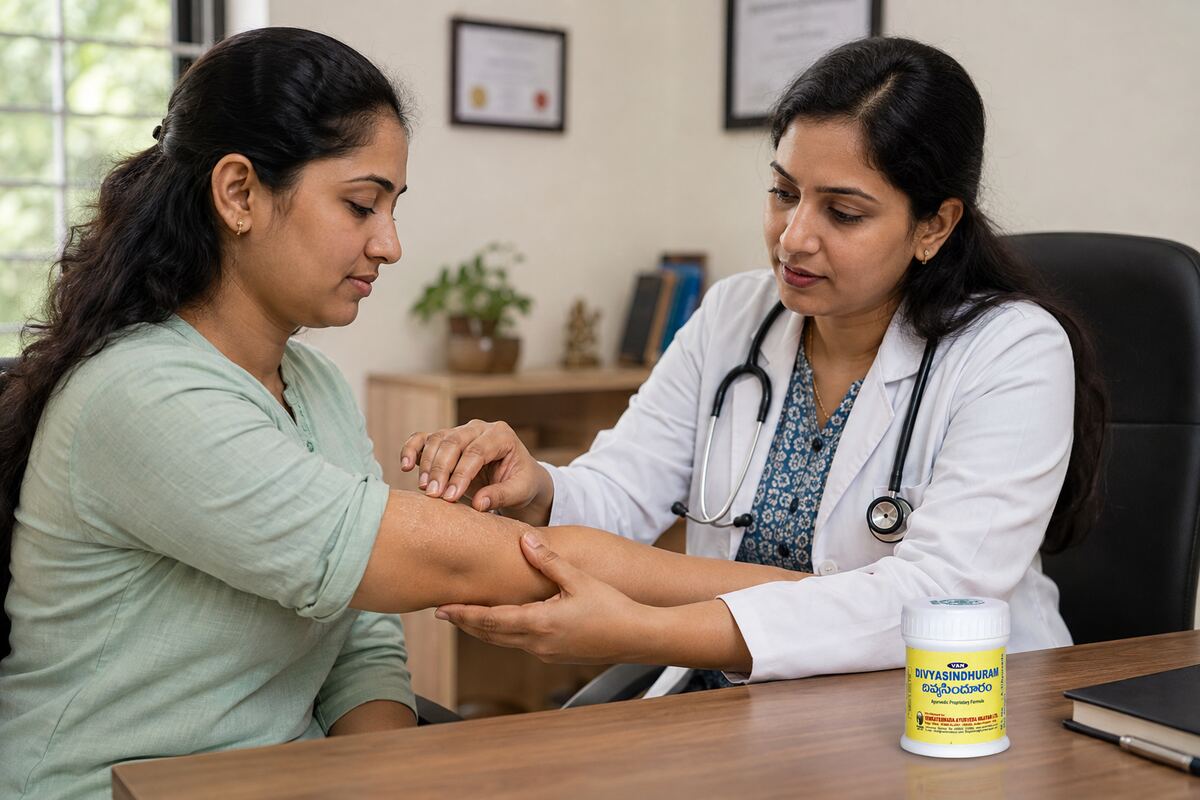
This traditional positioning does not mean that Divyasinduram treats every rash or cures chronic skin disease. A qualified Ayurvedic doctor should first review the symptoms, medical history, ongoing medicines and any test results. The doctor can then decide whether the product has an appropriate supporting role, select the dose and duration, and monitor the response.
Authentic sourcing also matters. Buy the sealed product from a reliable seller, check the label and expiry details, and follow only the prescribed directions. This caution becomes especially important whenever an Ayurvedic plan includes mineral-containing formulations. Pregnant or breastfeeding women, children, older adults and people with liver, kidney or other long-term health conditions should seek individual medical advice before use. Do not stop prescribed dermatology treatment unless the treating doctor advises it.
Simple habits that support a skin-care plan
Daily habits cannot replace treatment, but they can reduce irritation and reinfection risks.
- Keep skin folds and toe spaces clean and dry. Change out of sweaty clothing promptly.
- Do not share towels, clothes, razors or nail tools. Wash used clothing before wearing it again.
- Avoid scratching. Keep nails short to reduce skin damage and secondary infection.
- Use mild, fragrance-free skin products if irritation is a concern.
- Record possible triggers such as a new cosmetic, detergent, metal accessory, medicine, heat, sweat or workplace exposure.
- Take a clear photograph every few days in similar lighting to document change, but do not use photographs alone for self-diagnosis.
Avoid using steroid-containing or steroid-combination creams without medical advice. ICMR guidance specifically warns against self-medicating with steroid creams for suspected fungal infection because they can alter the lesion and make the infection harder to treat.
At the same time, doctors may correctly prescribe topical steroids for conditions such as eczema or psoriasis. The diagnosis and the prescribed strength, location and duration make the difference.
When a persistent rash needs prompt attention
Arrange a medical review when a patch keeps returning, spreads to new areas, affects the scalp or nails, causes pain or discharge, or does not improve with correctly followed treatment. Testing becomes especially useful when the appearance is unclear or an infection repeatedly returns.
Seek urgent medical care for blistering, facial or lip swelling, breathing difficulty, fever with a spreading rash, eye or mouth involvement, severe pain, or a rash that expands rapidly. These signs need timely assessment rather than a home remedy or online consultation alone.
Seek personalised Ayurvedic guidance
Skin complaints rarely follow one pattern. A personalised consultation can help connect the visible symptoms with your health history and current treatment. Use Ayur Store’s free online Ayurvedic doctor consultation before starting Divyasinduram or combining it with other medicines.
With correct diagnosis, practical skin care and qualified supervision, you can approach recurrent flares more safely and systematically. If your doctor recommends it, explore authentic Divyasinduram at Ayur Store and browse the wider Ayur Store range for doctor-guided Ayurvedic care.
Check out more articles at Ayurveda Blog.