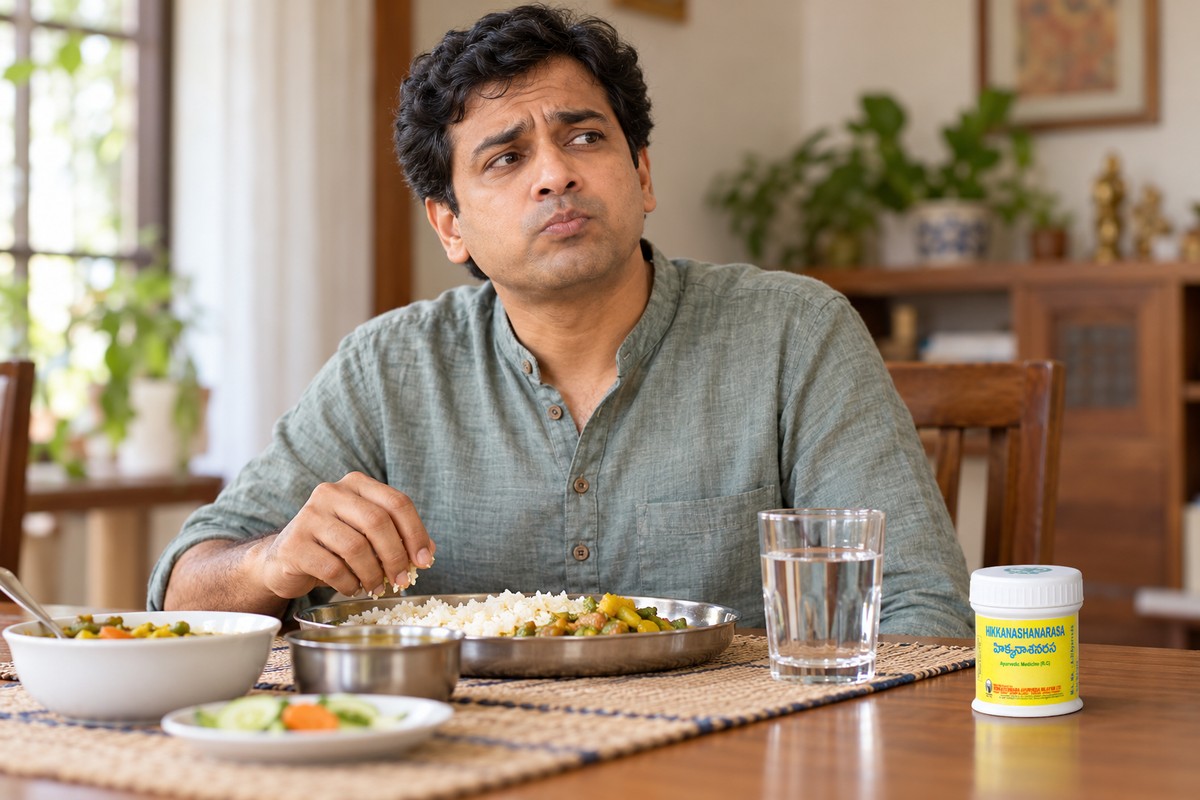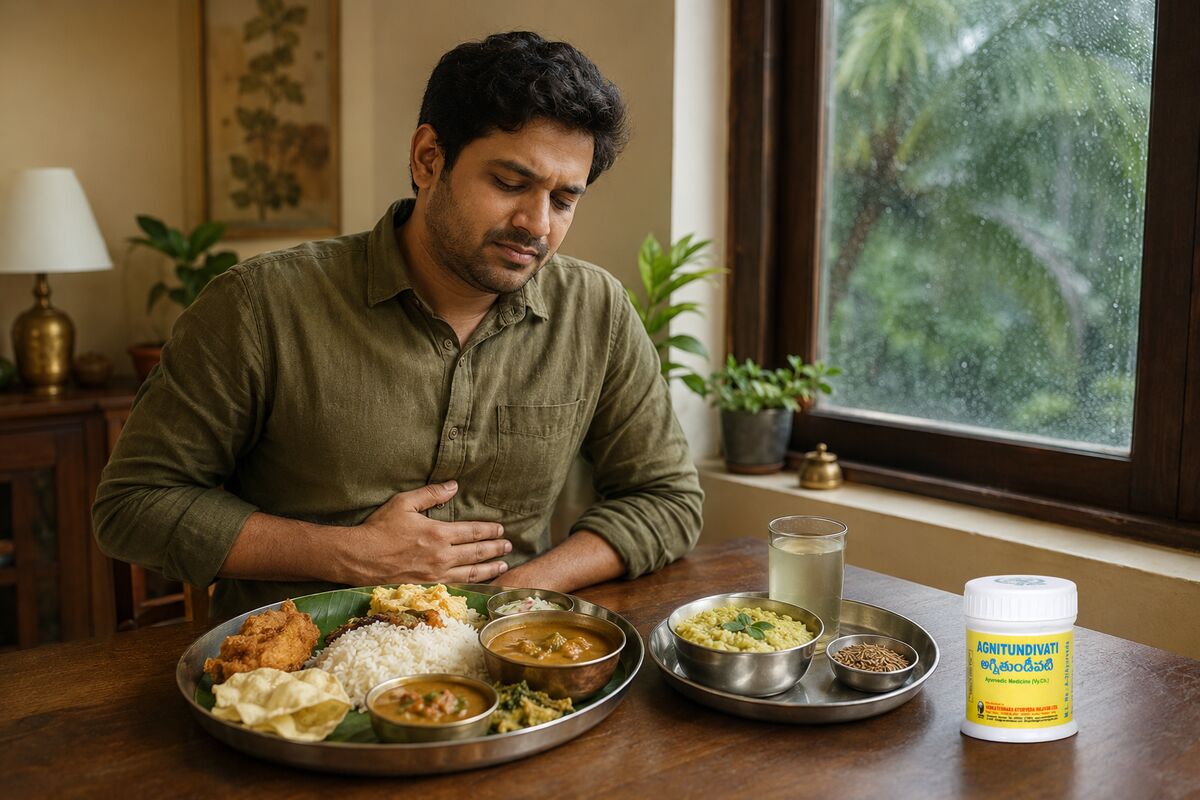
A heavy meal can leave you feeling full, gassy, or uncomfortable for a few hours. However, when indigestion comes with cramping, loose stools, poor appetite, or body soreness, calling everything “acidity” may hide important clues. People searching for Agnitundivati for indigestion and colic pain should learn the symptom pattern. Additionally, they should know when simple home care is appropriate.
Indigestion Is Not Always Acidity
Acidity usually describes burning in the upper abdomen or chest, a sour taste, or food coming back into the throat. Indigestion can feel broader. You may notice heaviness after food, early fullness, nausea, belching, bloating, or a weak appetite.
Colic is different again. It often feels like pain that tightens and eases in waves, much like a muscle repeatedly clenching and relaxing. Loose stools, gas, or intestinal irritation can accompany it. Meanwhile, body aches may appear with dehydration, infection, poor sleep, physical strain, or another health problem. The same person can experience several of these symptoms together, but they do not always share one cause.
That is why the location, timing, and intensity of discomfort matter. Pain that begins after rich food may have a different explanation from persistent pain on one side of the abdomen. Repeated symptoms deserve a proper assessment instead of repeated self-treatment.
Where Agnitundivati May Fit in a Guided Plan
Agnitundivati is an Ayurvedic medicine traditionally used for indigestion, colic, dysentery, neuralgic pain, and muscular soreness. This traditional positioning connects the medicine with the wider symptom cluster described above, rather than with acidity alone.
However, a product description cannot diagnose the reason for abdominal pain or loose stools. A qualified Ayurvedic practitioner should review your symptoms, health history, current medicines, and digestive tolerance before recommending use. This is especially important for children, older adults, pregnant or breastfeeding women, and people living with diabetes, liver disease, kidney disease, ulcers, or other long-term conditions.
Do not use Agnitundivati as a reason to delay tests, stop prescribed treatment, or ignore worsening symptoms. The safer approach is to place it within a personalized care plan after the likely cause has been considered.
Gentle Food and Hydration Habits for Short-Term Upset
When symptoms are mild and there are no warning signs, give digestion a lighter workload. Think of it like letting a busy kitchen clear its backlog before sending in another large order.
Choose smaller portions of warm, freshly prepared food. Simple options such as soft rice, khichdi, or a light vegetable preparation may feel easier than fried snacks, rich gravies, or very spicy meals. Eat slowly and stop before you feel overfull.
Drink safe water regularly, particularly if loose stools or vomiting have caused fluid loss. Take small, frequent sips if a full glass feels uncomfortable. If dehydration is a concern, ask a clinician or pharmacist whether an oral rehydration solution is appropriate. Avoid alcohol during a digestive upset, and limit very oily foods and unverified home remedies that combine several strong ingredients.
Rest can help, but gentle movement after food may feel better than lying flat immediately. Keep a short symptom note with meal timing, stool changes, pain location, and any suspected triggers. This record can make a consultation more useful if the problem continues.
When Abdominal Symptoms Need Medical Review
Seek prompt medical care for severe or localized abdominal pain, repeated vomiting, blood in the stool, black stools, high fever, jaundice, faintness, a swollen or rigid abdomen, or signs of dehydration such as very low urination, marked dizziness, or unusual drowsiness. Severe stomach pain, repeated vomiting, and blood in the stool are also identified as warning signs in guidance from India’s National Health Mission.
You should also arrange an examination if pain repeatedly returns, loose stools continue, you lose weight without trying, or symptoms last more than a few days. These patterns may require tests and should not be managed as routine acidity.
Seek Ayurvedic Consultation for Personalized Care
Digestive symptoms can look similar even when their causes differ. Use Ayur Store’s Free Ayurvedic Doctor Consultation to discuss your symptoms, existing medicines, suitable treatment options, and whether Agnitundivati is appropriate for you. Personal guidance is safer than choosing a dose from general online information.
If practitioner-guided Ayurvedic support forms part of your plan, explore authentic wellness products through Ayur Store and make an informed choice with professional advice.
Check out more articles at Ayurveda Blog.